Andrea Luzi

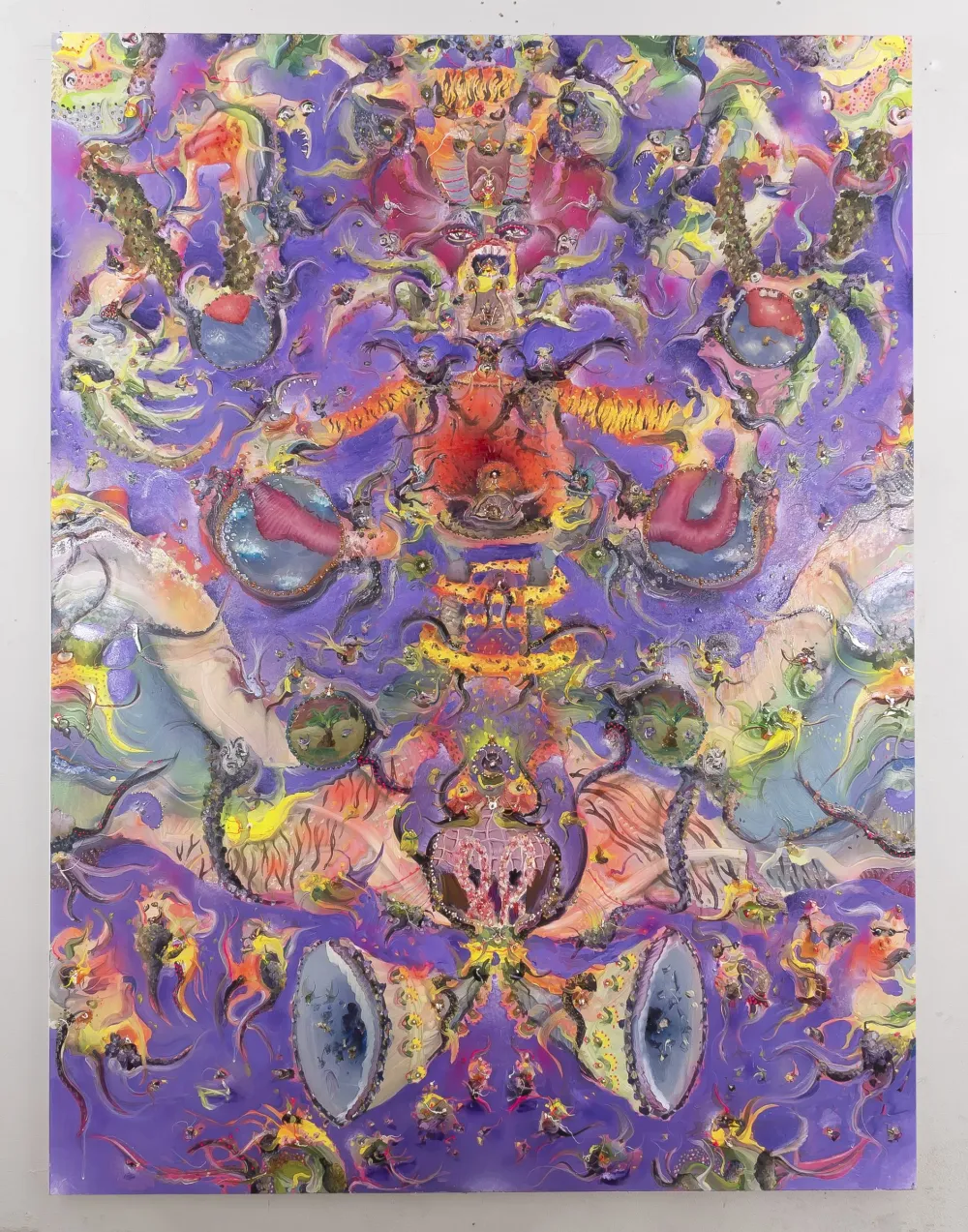
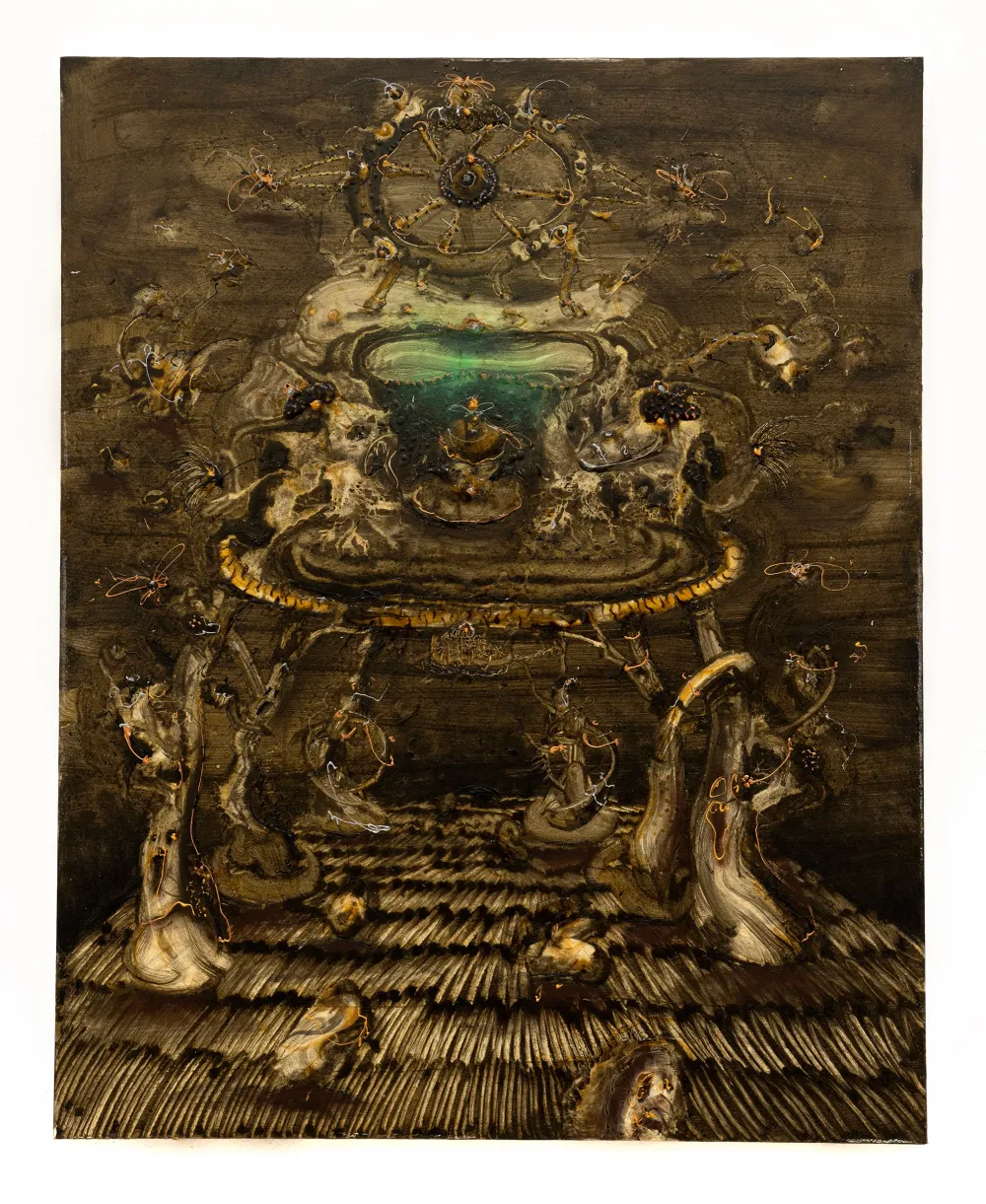
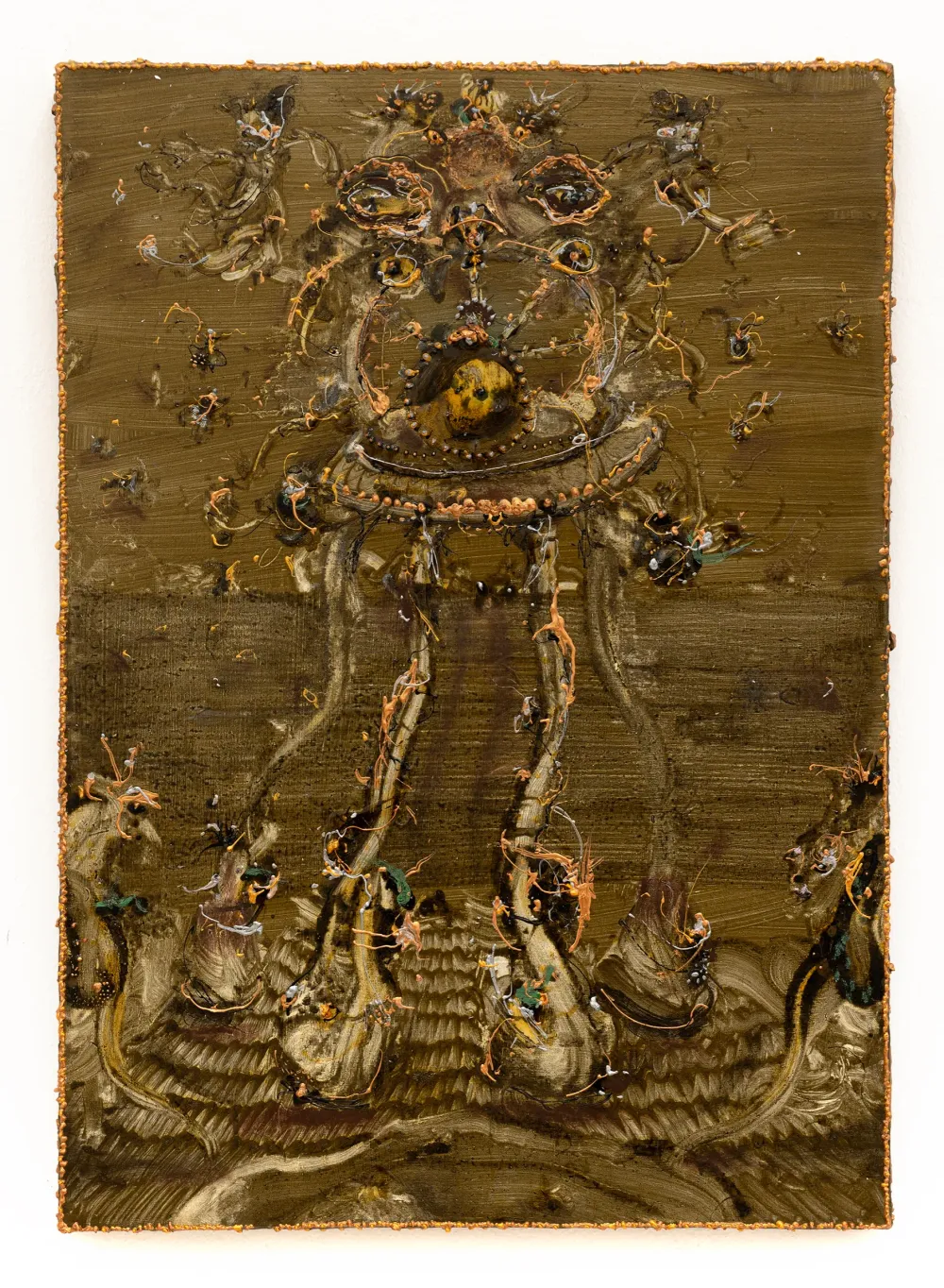
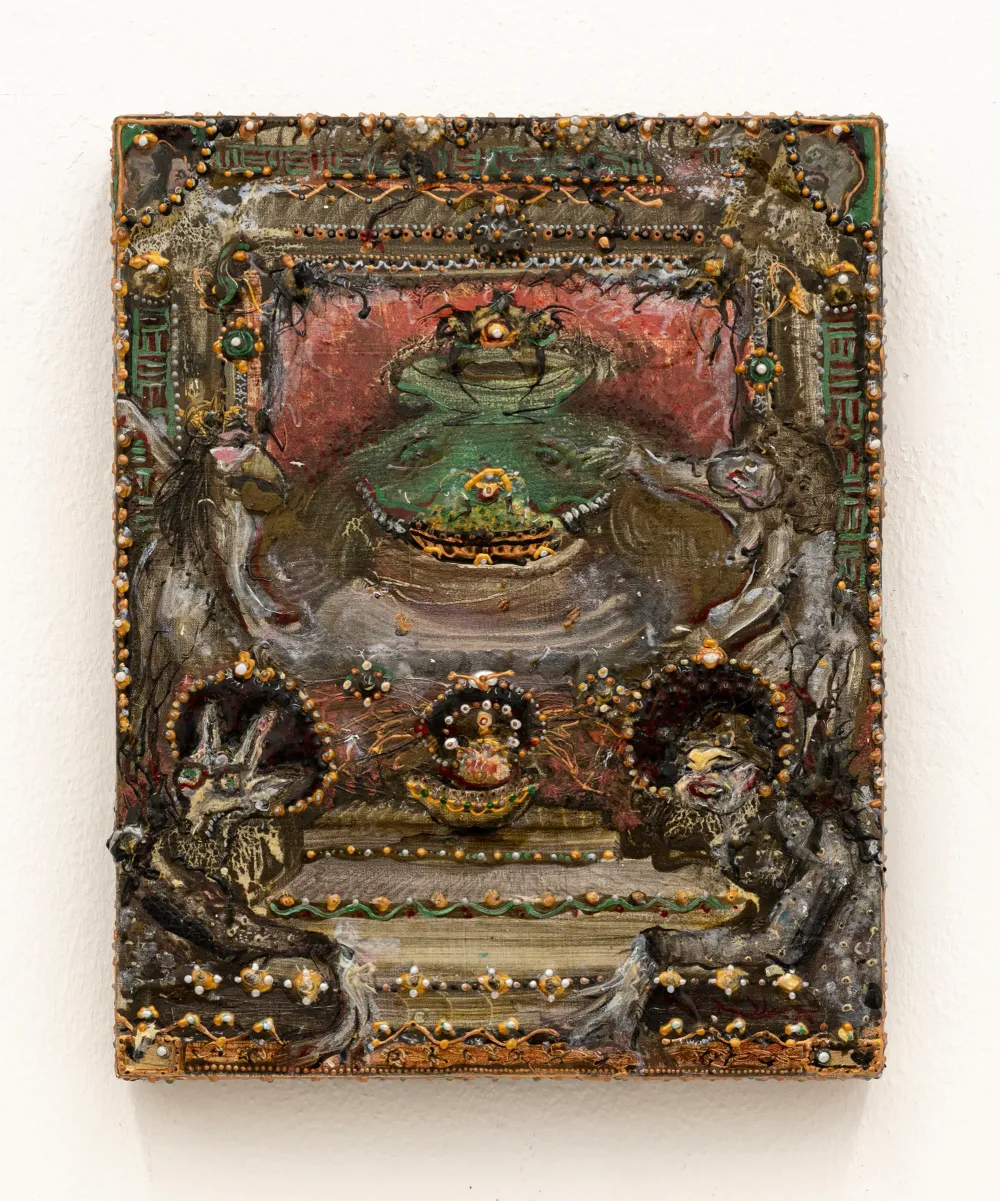
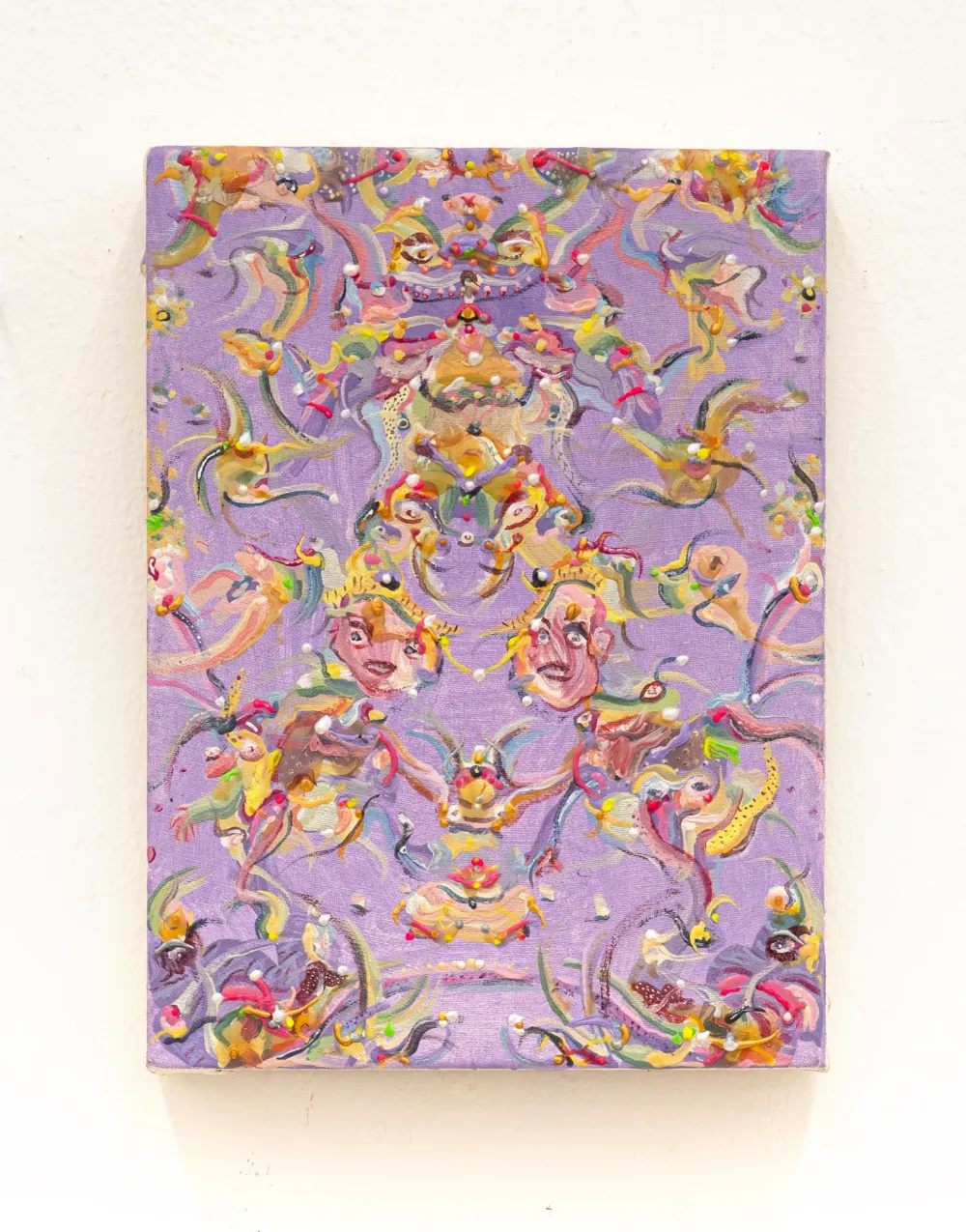
Access to abstractly dystopian scenarios is signalled through a vertigo-like perspective. Vertigo in the visual sense, that is, the bewilderment of the gaze amid the multiplication of details on the surface, arranged in sprouting concretions, organic simulacra and old cybernetics on a collision course in the cosmos. Vertigo also in the demand for an imaginative movement: hypothesising the consequences and drifts of the anthropocentric landscape, giving up stable coordinates and morphologies, buried under a halo of desolate fog, or encountering other panoramas that, through their chromatic and iconographic choices, are its schizophrenic, psychedelic, hallucinated counterpart.
The narrative of decay is heightened by the material and precious use of colour; thus, against backgrounds of mists and swamps, new primitive idols are already reassembling their cults and lavish architectures from the wreckage of the past.