Roberto de Pinto
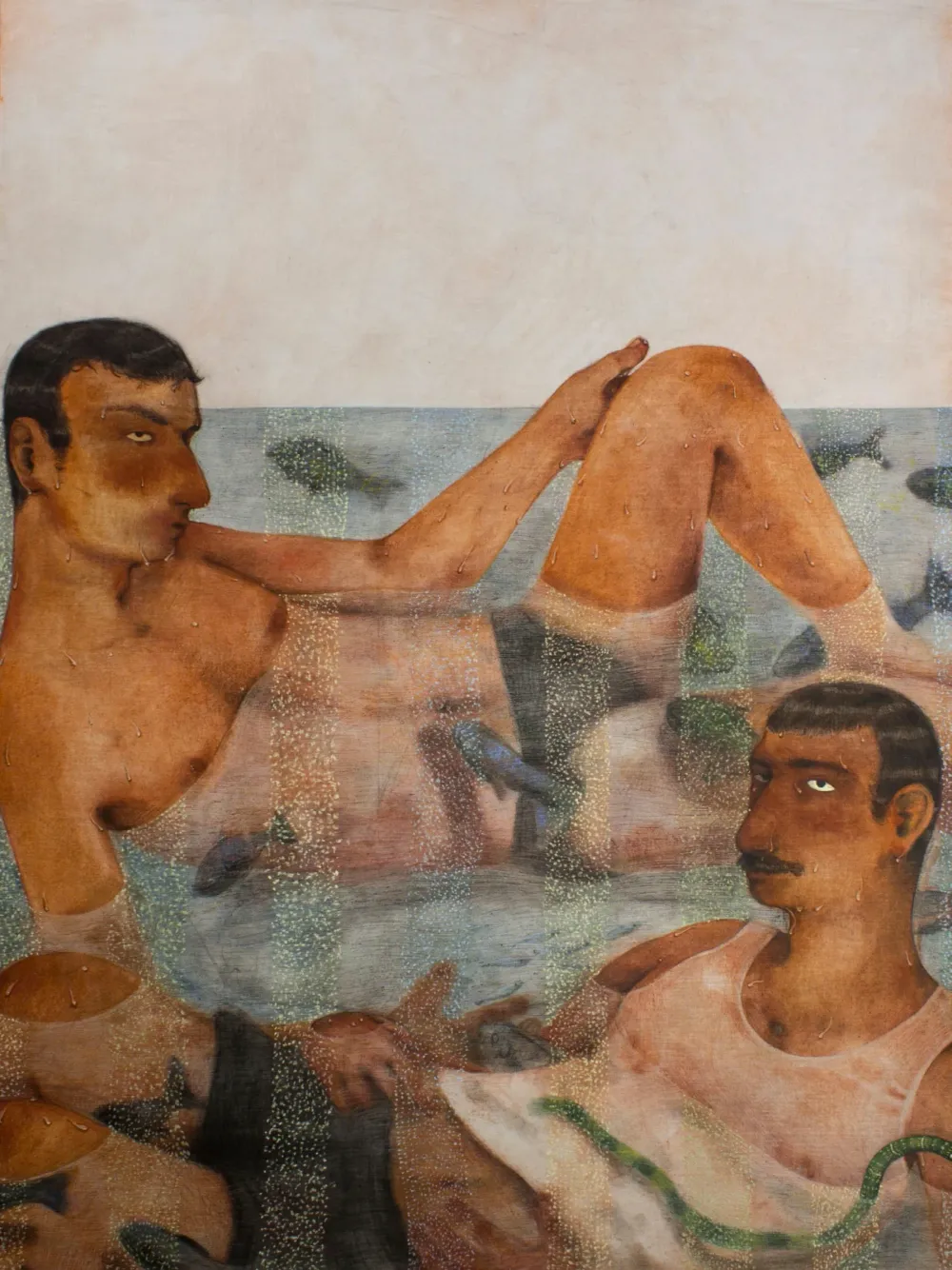
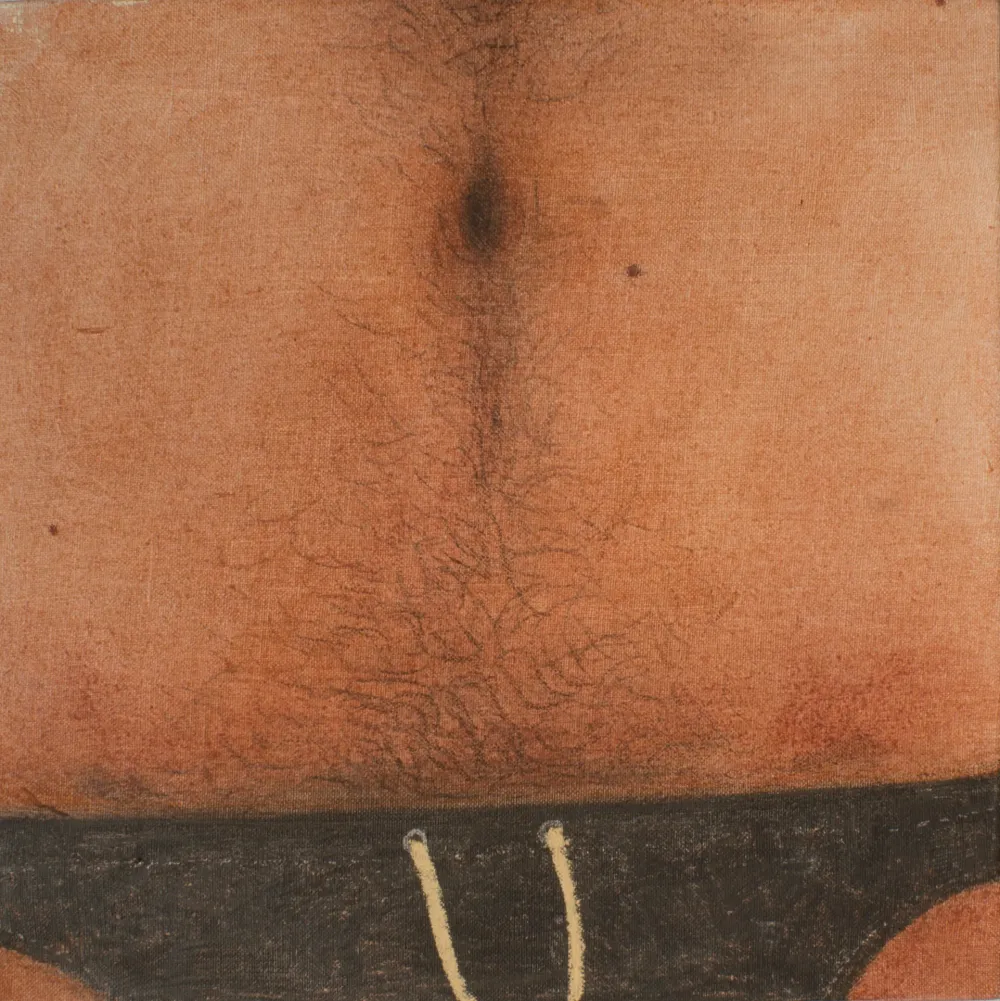
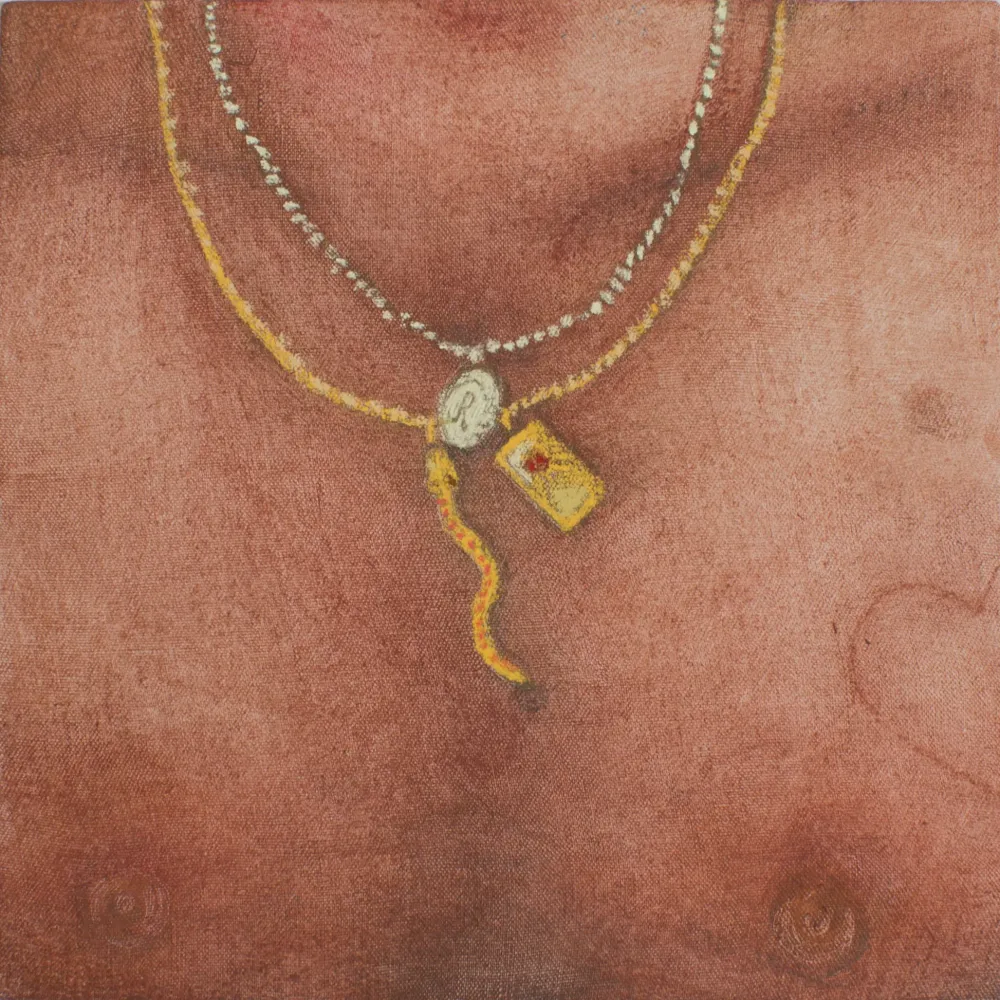
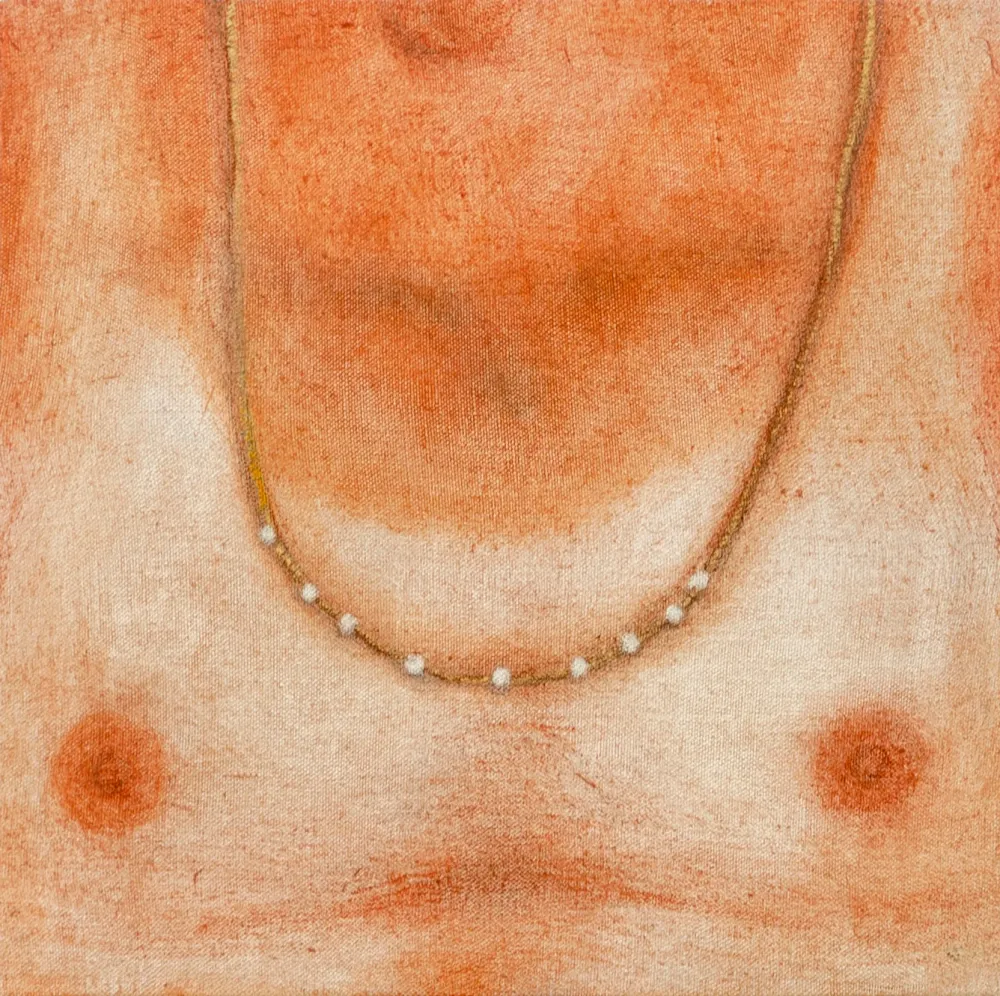
In Roberto de Pinto’s paintings, certain meteorological factors – in addition to obvious geographical ones – prompt each subject to take off their singlet, to stay in their swimming costume, to expose their naked skin to the sun’s rays.
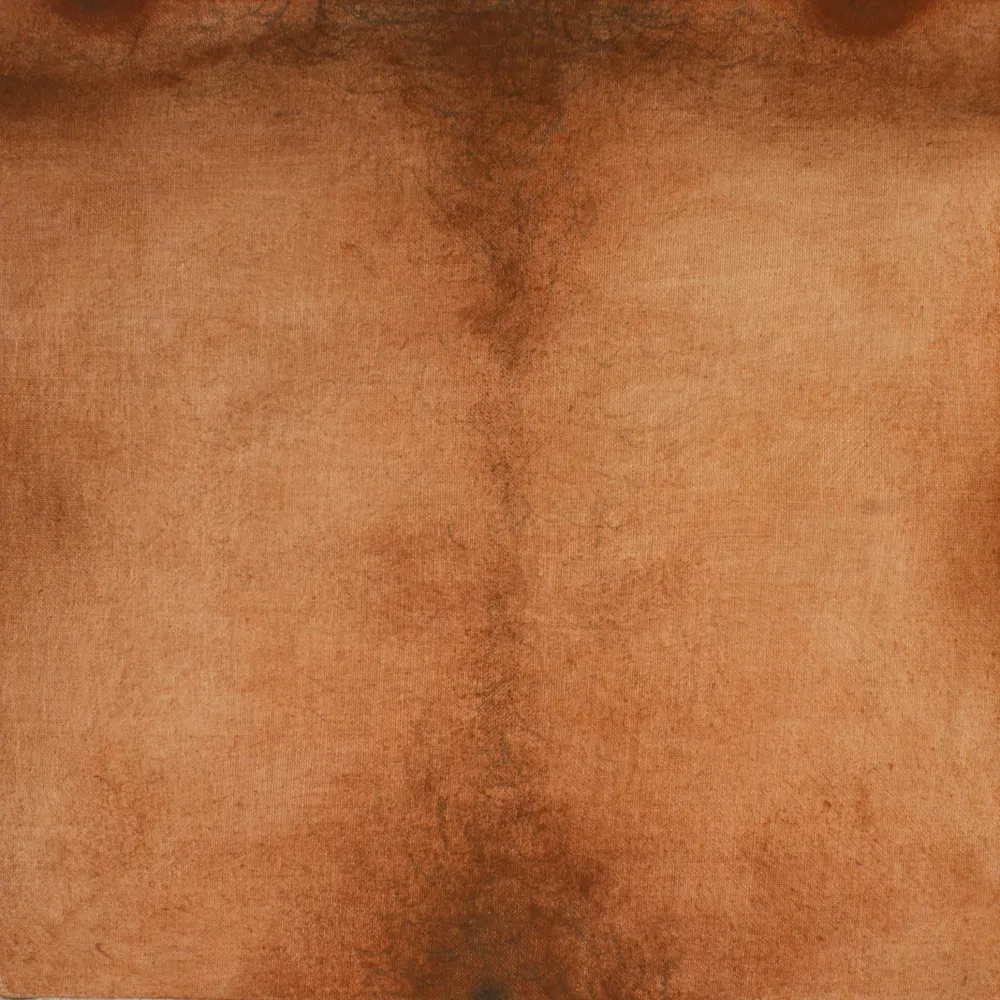
That skin burns and darkens to clay-rich earth and carbon: the same red and the same black of the divinities and heroes who crowded and decorated ancient vases. Chests painted and decorated by the sun, which casts shadows across them. Bodies stripped ‘naked’, showing rough skin covered in hair – sweaty, porous, callused and simple: sensitive to touch and to contact. In everyday life such ‘imperfections’ would provoke repulsion and disgust; on canvas they can be fully displayed and appreciated as aesthetic qualities.
The painting of these works is entrusted to encaustic, a fundamental component of their process. Mixed with pigments, earths and charcoal, the wax creates a patina that recalls the time-refined surface of a frescoed wall.